Updated: July 2026
What is the Best Time to Visit a Private Indonesian Island?
The best time to visit a private Indonesian island is during the dry season, from May to September, for consistently sunny skies and calm seas. However, the ideal window depends entirely on your destination and priorities within the archipelago.
- For Bali & the Sunda Islands: Target June through September for minimal rainfall and optimal diving conditions.
- For Raja Ampat & Maluku: The seasons are reversed; visit between October and April when the waters are calmest.
- For Value & Lushness: Consider the shoulder months of April, May, and October for fewer crowds and vibrant green landscapes.
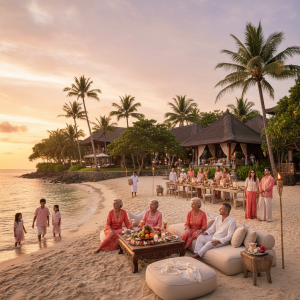
The air hangs heavy, thick with the scent of night-blooming jasmine and the faint, briny tang of the Flores Sea. A lone gecko calls from the rafters of your open-air villa, a percussive counterpoint to the gentle lapping of waves on the shore just 20 meters away. From your daybed, you watch the last sliver of a tangerine sun dip below the horizon, silhouetting the volcanic cone of a distant island. This is the singular, profound tranquility of an Indonesian island owned, for a time, only by you. But the perfection of this moment is no accident; it is a carefully calibrated alignment of season, location, and intent. The question I hear most often from discerning travelers is not where to go, but when. Answering it requires moving beyond simple meteorology and into the nuanced rhythm of the world’s largest archipelago.
Deconstructing the Calendar: Dry Season vs. Green Season
At first glance, the answer seems straightforward. Indonesia, which straddles the equator and consists of over 17,500 islands, has two dominant seasons: dry (roughly May to September) and wet (October to April). For most travelers seeking sun-drenched days and placid waters, the dry season is the obvious choice. During these months, particularly from June to August, destinations like Bali, Lombok, the Gili Islands, and the Komodo archipelago experience minimal rainfall, with average daily temperatures hovering around 30°C (86°F). Humidity is lower, and the prevailing southeasterly winds create ideal conditions for sailing and surface water activities. This is the high season, and for good reason. The visibility for diving can exceed 30 meters, and alfresco dining every night is practically guaranteed. However, to dismiss the “green season” is to miss a more textured, and at times more exclusive, side of Indonesia. I prefer the term ‘green season’ to ‘wet season’ because the latter conjures images of ceaseless monsoonal downpours, which is rarely the case. Typically, rainfall comes in short, intense bursts in the afternoon or overnight, leaving the rest of the day fresh, clear, and intensely vibrant. The foliage becomes impossibly lush, waterfalls are at their most dramatic, and the tourist footprint, even at popular hubs, thins out considerably. For a private island indonesia buyout, this can mean enhanced privacy and a landscape humming with life. The air, cleansed by the rain, carries the scent of damp earth and blooming frangipani, a truly intoxicating perfume.
A Tale of Two Monsoons: Navigating Regional Climate Variations
To speak of a single Indonesian climate is a profound oversimplification. This is a nation stretching over 5,000 kilometers from east to west, wider than the continental United States. Consequently, the timing of the monsoon winds creates dramatically different peak seasons depending on your location. As a rule of thumb, the western and central islands like Sumatra, Java, Bali, and the Nusa Tenggara islands (Lombok, Sumba, Flores) follow the classic April-to-October dry season. This is where you’ll find the majority of well-known private island retreats. However, journey east to the Maluku Islands (the original Spice Islands) and West Papua, home to the legendary Raja Ampat archipelago, and the calendar flips entirely. Here, the driest and calmest period runs from October to April. Visiting Raja Ampat in July, the peak of Bali’s season, would mean contending with rough seas and higher rainfall. A seasoned yacht captain I know, who has charted these waters for 15 years, refuses to even take charters to Raja Ampat between June and September. He explained, “It’s not just the rain; the south-easterly winds churn the Dampier Strait, making crossings uncomfortable and reducing dive visibility. The magic is lost.” This regional variation is critical knowledge for anyone planning to secure their own private island in Indonesia. The key is to first select your desired experience—be it the cultural heart of Java, the dragons of Komodo, or the exceptional marine biodiversity of Raja Ampat—and then let that dictate the timing of your journey.
Aligning Your Itinerary with Marine Life Migrations
For many of our readers, a trip to a private Indonesian island is intrinsically linked to the spectacular marine world beneath the waves. The timing of your visit can be the difference between a pleasant dive and a life-altering encounter. The Coral Triangle, of which Indonesia is the epicenter, contains nearly 76% of the world’s coral species and is a superhighway for migratory marine life. In the waters of the Komodo National Park, a UNESCO World Heritage site, the peak season for encountering majestic manta rays at their cleaning stations is during the dry season, from June to September, when upwellings of cool, plankton-rich water attract them in large numbers. Off the coast of Nusa Lembongan and Nusa Penida, near Bali, the elusive and enormous Mola Mola (ocean sunfish) ascends from the deep between July and October. To witness this 1,000-kilogram giant is a true diver’s prize. Conversely, the world’s premier diving destination, Raja Ampat, hits its stride when the rest of Indonesia is in its green season. From October to April, the seas are glassy, and the visibility is exceptional, allowing for perfect views of the area’s famed pygmy seahorses, wobbegong sharks, and vast schools of fish. Water temperatures remain a balmy 28-30°C year-round, but the surface conditions make all the difference for a luxury liveaboard or a stay at an exclusive dive resort. Planning around these natural phenomena elevates a trip from a simple vacation to a purposeful expedition.
The Shoulder Seasons: The Savvy Traveler’s Secret
The true connoisseurs of Indonesian travel, those who have returned to the archipelago year after year, often whisper of the shoulder seasons. These transitional months—specifically April, May, and October—represent the sweet spot on the calendar. They offer a sublime blend of the best attributes of both the dry and green seasons, often with the added benefits of lower prices and greater availability. In May, for example, the first month of the dry season, the landscape is still radiantly green from the preceding rains, but the persistent downpours have ceased. The tourist crowds of July and August have yet to arrive, and there’s a palpable sense of freshness in the air. Similarly, October sees the return of the first rains, but they are often sporadic, and the land breathes a sigh of relief after the long, dry heat of summer. From a logistical standpoint, these periods are golden. I spoke with the manager of a top-tier private island resort in the Anambas Archipelago who noted that buyout rates in May can be 15-20% lower than in August. Furthermore, securing preferred villas or even a full island exclusive requires less than the 12-to-18-month lead time often necessary for peak holiday periods. The weather is still predominantly sunny, the seas are generally calm, and you get to experience the islands in a more serene, unhurried state. For those with flexibility, the shoulder season is unequivocally the most intelligent time to visit.
Navigating Peak Season Premiums and Cultural Festivities
While the shoulder seasons offer value, sometimes a trip must coincide with fixed holiday schedules. It’s important to understand the landscape of Indonesia’s peak seasons, as they command premium pricing and demand advance planning. The two primary peaks are the European summer holidays (July and August) and the festive season, stretching from roughly December 20th to January 5th. During these times, demand for the best villas and exclusive Indonesian island buyouts skyrockets. Booking a year or more in advance is not just recommended; it is often essential. Expect to pay a premium of anywhere from 25% to 40% over standard rates. Beyond the holiday rushes, timing your visit to coincide with a unique cultural event can offer an extraordinary layer to your experience. The Balinese New Year, known as Nyepi, is a particularly profound example. Occurring in March, it is a day of complete silence, with all activity on the island, including the international airport, ceasing for 24 hours. Experiencing this from the sanctuary of a private villa or island is remarkable—the stars, free from light pollution, are astonishing. In Sumba, the Pasola festival, a ritualistic battle between two teams of spear-wielding horsemen, takes place in February or March and is a raw, spectacular display of ancient tradition. According to the official Indonesia Travel portal, these events offer a window into the nation’s soul. Coordinating a luxury escape around them requires careful planning with a knowledgeable team, but the reward is an immersive journey that transcends a typical beach holiday.
Quick FAQ: Your Questions Answered
As an editor, I receive a constant stream of questions from travelers planning their Indonesian sojourns. Here are a few of the most common queries, answered directly.
Is there a bad time to visit Indonesia?
Not necessarily, but there are less-than-ideal times for specific regions. The peak of the wet season, particularly January and February, can see heavy, prolonged rain and rough seas in the Bali/Lombok area, which can disrupt boat travel and beach activities. Similarly, visiting Raja Ampat in July or August is generally advised against due to wind and waves. The key is regional alignment.
What about typhoons or hurricanes?
Indonesia’s location near the equator means it is not in the typical path of typhoons or cyclones that affect other parts of Asia and the Pacific. While strong storms can occur, the country is generally safe from large-scale cyclonic weather systems, making it a relatively stable year-round destination from a storm-risk perspective, according to climate data.
When is the best time for surfing?
For the classic breaks in Bali, Uluwatu, and the Mentawai Islands, the prime surf season aligns with the dry season, from April to October. This is when consistent groundswells from the southern Indian Ocean arrive, creating the top-tier waves the region is famous for. The winds are also typically favorable and offshore.
Does the timing affect wildlife viewing on land?
Yes, particularly for orangutans in Borneo and Sumatra. While they can be seen year-round, the dry season (June to September) is often best. The apes tend to venture more widely in search of water, and the trails in the national parks are less muddy and more accessible for trekking.
Ultimately, the “best time to visit a private indonesian island” is a personal calculation, a balance of climate, cost, and personal passions. Whether your dream is to dive with giants of the deep, witness ancient rituals, or simply claim a stretch of perfect white sand for yourself under a cloudless sky, there is a perfect window in the Indonesian calendar waiting for you. The secret lies in looking beyond the broad strokes of “wet” and “dry” and embracing the subtle, regional rhythms of this magnificent archipelago. Let our team help you choreograph that perfect moment.
Explore our portfolio of exclusive escapes and begin planning your journey with Private Island Indonesia.