Updated: July 2026
Booking a Private Indonesian Island During the Dry Season
- Ensures consistently clear, sunny skies and calm ocean waters for transfers and activities.
- Provides prime underwater visibility, often exceeding 30 meters, for diving and snorkeling.
- Requires booking 9 to 12 months in advance due to extremely high demand for limited properties.
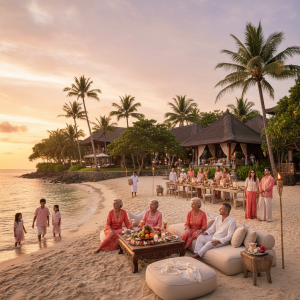
The air is still. The only sound is the gentle lapping of the Flores Sea against the powder-soft sand, a rhythmic counterpoint to the distant call of a Brahminy kite. From the expansive deck of your private villa, the sun has just begun its slow descent, painting the sky in hues of saffron and rose over the dormant volcanic cone of Sangeang Api on the horizon. The humidity of the past season has vanished, replaced by a balmy, comfortable warmth that invites you to linger. This is the singular promise of Indonesia in its prime, a sensory experience only available during the dry season, and the precise reason why discerning travelers plan their escapes to this archipelago nearly a year in advance.
Understanding Indonesia’s Dry Season: A Climatological Certainty
For those of us who have spent years charting the nuances of global travel, Indonesia’s dry season, which typically runs from April through October, represents a near-perfect confluence of meteorological factors. This is not merely about avoiding rain; it is about embracing a period of profound stability that unlocks the full potential of this 17,508-island nation. Average daily temperatures hover between a very agreeable 28 to 32 degrees Celsius, but the critical difference is the dramatic drop in humidity. The oppressive dampness of the monsoon months gives way to a pleasant, dry heat, making everything from a midday swim to an evening dinner on the beach an exercise in pure comfort. This period sees an average of just 6 to 8 days of rain per month, compared to over 20 in the peak of the wet season.
However, a sophisticated understanding of the archipelago’s climate is essential. As detailed in academic overviews of the Climate of Indonesia, the sheer scale of the country means there are significant regional variations. While Bali, Lombok, and the islands eastward toward Flores and Komodo adhere strictly to this April-October dry spell, the equation is inverted in Raja Ampat and the Maluku Islands. There, the ideal window for travel is from October to April. This is the kind of insider knowledge that transforms a good trip into a flawless one. The shoulder months of May, June, and September are particularly prized by our contacts on the ground, offering the impeccable weather of the high season with slightly fewer yachts dotting the horizon. It’s a strategic choice for those seeking absolute tranquility.
The Prime Archipelagos for Dry Season Exclusivity
During these gilded months, certain island groups emerge as preeminent destinations for an exclusive buyout. The decision of where to anchor your experience depends entirely on the kind of sanctuary you seek. East of Bali, the Nusa Tenggara island chain offers a rugged, almost prehistoric beauty. Here, securing a private island near Komodo National Park, a designated UNESCO World Heritage Site, means exceptional access to top-tier dive sites where manta rays congregate in the dozens. The dry, savannah-like hills of the islands turn a beautiful shade of gold, and the calm seas ensure smooth sailing on a private phinisi schooner to witness the park’s 5,700 resident Komodo dragons.
Further east lies Sumba, an island that remains one of the archipelago’s best-kept secrets. It’s a world away from the polish of Bali, a place of deep animist traditions, wild horses, and some of the most revered surf breaks on the planet. Renting a sprawling private estate here during the dry season means having legendary waves like “Occy’s Left” virtually to yourself. The island’s unique Pasola festival, a ritualized spear-fighting tournament on horseback, takes place earlier in the year, but the cultural resonance is palpable year-round. For those seeking a more accessible yet equally private retreat, the islets surrounding Lombok and the Gili Islands offer a compelling proposition. Imagine a private atoll, reachable by a 15-minute speedboat ride, where the only footprints on the sand are your own, yet the amenities of a top-tier resort are at your immediate disposal.
Navigating the Archipelago: The Logistical Advantages of Dry Season Travel
The practical benefits of booking a private Indonesian island during the dry season extend far beyond the promise of a tan. Logistics, the often-unseen scaffolding of any luxury journey, become infinitely simpler and more reliable. The single most significant advantage is the state of the seas. The monsoonal churn gives way to placid, glass-like water, which is not merely an aesthetic pleasure but a critical operational factor. This calmness is essential for the seamless operation of private yacht charters, especially the magnificent wooden phinisi schooners that are synonymous with Indonesian exploration. Transfers from regional airports to your private island by speedboat are smooth and comfortable, not a bracing, spray-soaked ordeal.
For diving and snorkeling enthusiasts, the conditions are nothing short of sublime. Water visibility in areas like the Alor Archipelago or the Komodo chain can exceed an astonishing 40 meters, transforming the underwater world into a high-definition spectacle. This clarity is a direct result of reduced river runoff from the islands, which clouds coastal waters during the wet season. Furthermore, air travel, often the most fraught part of reaching remote paradises, sees a dramatic increase in reliability. The frequent, unpredictable thunderstorms of the monsoon that can ground small aircraft and delay flights for hours are virtually non-existent. This ensures that your meticulously planned itinerary, from the private jet landing in Denpasar to the final seaplane hop to your island, proceeds without a hitch. As a veteran phinisi captain I’ve sailed with for years puts it, “In the dry season, the sea gives you permission. In the wet season, you must ask for it.”
Securing Your Sanctuary: The Art of Advance Booking
The idyllic conditions of the dry season create intense demand for a severely limited supply of properties. The concept of a last-minute booking for a true private island in Indonesia between June and September is, for all practical purposes, a fantasy. The most sought-after estates—those with impeccable service, architectural significance, and exclusive access to pristine marine environments—are often reserved 12 to 18 months in advance, particularly for the peak European holiday weeks in July and August. This is not a market for casual browsing; it requires decisive, forward planning. The inventory of true one-island, one-resort properties numbers in the low dozens across an entire nation of more than 17,000 islands.
This is precisely why engaging with a specialist is not an indulgence but a fundamental necessity for a successful acquisition. Navigating this landscape requires deep-rooted connections and an intimate understanding of each property’s unique character and logistical intricacies. A dedicated planner, like the seasoned experts at Private Island Indonesia, acts as your personal curator. The process begins with an in-depth consultation to understand your group’s specific desires, whether it’s for multi-generational family activities, a wellness-focused retreat, or a base for a serious diving expedition. From there, they present a vetted shortlist of available properties, manage the complex contractual details, and orchestrate every single logistical element, from VIP airport services to chartering the necessary aircraft and yachts. Attempting to coordinate these moving parts independently is not only inefficient but also risks compromising the very seamlessness that defines a luxury experience. When you invest in this level of travel, you are investing in certainty, and that is what a specialist delivers.
Life on the Island: Curating the Perfect Dry Season Itinerary
Once your island is secured, the dry season provides a flawless canvas upon which to design your daily experiences. The reliability of the weather allows for a level of personalization and spontaneity that is simply not possible during the monsoon. Your days are not dictated by the forecast. Private chefs can confidently plan a torch-lit barbecue on a deserted sandbar, knowing it will not be interrupted by a sudden downpour. Morning yoga sessions can be held on an exposed clifftop with panoramic ocean views, and outdoor spa treatments can be scheduled under a shaded canopy by the sea. The clear, dark night skies, free from cloud cover, also make for spectacular stargazing, often with a resident expert on hand to navigate the southern constellations.
The experience is defined by this seamless integration of indoor and outdoor living. On Pulau Joyo in the Riau Archipelago, for example, the staff can arrange an elaborate dinner on a floating pontoon, a magical experience that would be too risky with the unpredictable squalls of the wet season. The dry season also brings an abundance of local produce to your table. The menus are built around line-caught fish delivered daily by local fishermen and a cornucopia of tropical fruits at their peak sweetness. Your itinerary can be as structured or as fluid as you wish. Perhaps one day is dedicated to a fully-crewed phinisi journey to a remote snorkeling site, while the next is reserved for nothing more than moving from your freshwater pool to the ocean and back again. The promise of a private island in Indonesia is the luxury of choice, and the dry season ensures every choice is available to you.
Quick FAQ: Booking Your Dry Season Escape
When is the absolute best time within the dry season to visit?
While the entire April to October period is exceptional, my personal recommendation, echoed by hoteliers across the region, is for May, June, and September. These months offer the perfect equilibrium: superb weather, landscapes that are still vibrantly green from the tail-end of the rains, and slightly fewer travelers than the absolute peak school holiday months of July and August. You get all the benefits with an added layer of tranquility.
Are there regional exceptions to the standard dry season?
Yes, and this is a critical detail for planning. The Maluku Islands (the historic Spice Islands) and the diving mecca of Raja Ampat operate on an inverted weather calendar. Their prime dry season runs from October to April. Attempting to visit Raja Ampat in July would place you in the middle of their rainy season. This is why consulting official resources like Wonderful Indonesia or a regional specialist is paramount before committing to a location.
How far in advance must I book a private island for the dry season?
For the most exclusive and well-regarded islands, a lead time of 9 to 12 months is standard. For peak dates, such as the last two weeks of July and the first three weeks of August, or for festive periods, it is not uncommon for properties to be booked out 18 months or more in advance. The limited inventory means that the best options are the first to go.
How much should I budget for a private island rental?
The cost spectrum is broad and reflects the exclusivity and level of service. A fully-staffed, multi-villa private island estate can range from $5,000 to upwards of $50,000 per night for a complete buyout. Key factors influencing the price include the island’s accessibility, the number of staff, the inclusion of amenities like yachts and dive masters, and the total number of guests. Most properties also require a minimum stay, typically between 3 and 5 nights.
The Indonesian archipelago during its dry season is not merely a destination; it is a private universe of exceptional beauty and tranquility waiting to be discovered. The clarity of the water, the warmth of the air, and the reliability of the weather create a canvas for experiences that are simply not possible at other times of the year. This is the time to sail, to dive, to explore, and to disconnect in the most profound way imaginable. To begin curating your own journey and to explore our exclusive portfolio of vetted island properties, connect with the experts at Private Island Indonesia. Your sanctuary awaits.