Updated: July 2026
Private Island Investments in Indonesia: Understanding 2027 Market Dynamics and Value
As of 2027, private island prices in Indonesia typically range from approximately $900,000 to $23.5 million. Entry-level undeveloped options in regions like Anambas and Telaga Cina start around $900,000–$1.5 million, whilst premium resort-integrated islands, such as Bawah Reserve, can exceed $15 million–$23.5 million, reflecting significant market segmentation and growth.
Indonesia’s private island market continues its robust expansion into 2027, presenting a compelling landscape for discerning investors and those seeking privacy. The archipelago, with its thousands of islands, offers a diverse range of opportunities, from undeveloped parcels ripe for bespoke development to established luxury resorts. This year, specific regions and property types are showing distinct trends, driven by a combination of increasing global demand, strategic government initiatives, and a growing emphasis on sustainable development.
The 2027 Private Island Price Spectrum
The financial outlay for a private island in Indonesia in 2027 is broad, reflecting the vast differences in location, development status, and existing infrastructure. Current projections indicate a dynamic market:
- Entry-Level Undeveloped Islands: Expect to find options in regions such as Telaga Cina, with prices starting from $900,000 to $1.5 million. These typically represent raw land, offering a blank canvas for development. Some opportunities may even begin as low as $500,000 for specific, smaller, less accessible plots.
- Mid-Range Developed Islands: Properties offering basic infrastructure or partial development, such as Dekar Island, are priced in the range of $4.5 million to $7 million. These islands often come with some existing structures or permits, reducing initial development complexities.
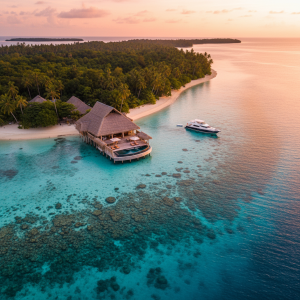
- Premium Resort-Integrated Islands: At the upper end of the market, fully developed luxury resort islands, exemplified by properties similar to Bawah Reserve, command prices between $15 million and $23.5 million. These are typically turnkey operations, generating substantial rental income and offering sophisticated amenities.
This stratification underscores the varied investment profiles available, catering to different capitalisation levels and development aspirations.
Anambas Islands: A Market on the Rise
The Anambas Islands province is emerging as a particularly attractive investment destination for 2027. This region, strategically located between Singapore and Borneo, offers unique advantages:
Land acquisition costs in Anambas are notably lower, approximately 20–30% less than in more established tourist areas like Bali or Lombok. This cost efficiency, combined with projected annual price appreciation of 7.3% due to scarcity-driven demand, positions Anambas as a prime location for early investors. The provincial government’s measured approach to development, including limits on over-commercialisation, is designed to preserve long-term value and maintain the region’s pristine character.
The presence of Bawah Reserve, the only five-star property in the Anambas province, further validates the region’s potential for high-yield investment. Its rental rate of $35,000 per night (for the entire resort) demonstrates the capacity for significant returns on luxury island developments here, proving the market for high-end tourism is robust and growing.
Macroeconomic Trends Supporting Indonesian Island Investment
The broader economic outlook for private island investments in the Asia Pacific region remains exceedingly positive for 2027 and beyond. The Asia Pacific private island market is projected to achieve a Compound Annual Growth Rate (CAGR) of 8.4% from 2026 to 2034. Indonesia is expected to account for a major share of these transactions, competing with other prominent island nations such as the Maldives, Fiji, Thailand, and the Philippines.
Globally, the private island resort market, valued at $7.6 billion in 2024, is projected to reach $15.1 billion by 2033, demonstrating a global CAGR of 7.8%. The Asia Pacific region contributes significantly to this, holding 38% of global revenue in 2024. These figures highlight a sustained and accelerating interest in private island ownership and resort development, with Indonesia positioned at the forefront of this growth.
| Market Segment | 2024 Value | 2033 Value (Projected) | CAGR |
|---|---|---|---|
| Asia Pacific Private Island Market (2026-2034) | N/A | N/A | 8.4% |
| Global Private Island Resort Market | $7.6 Billion | $15.1 Billion | 7.8% |
| Asia Pacific Resort Market Share (2024) | 38% of Global | N/A | N/A |
The Importance of Eco-Tourism and Marine Protection
A significant trend influencing the 2027 market is the increasing emphasis on eco-tourism and marine park protection. Indonesia’s government and private developers are increasingly prioritising sustainable practices, recognising the intrinsic value of the archipelago’s biodiverse marine ecosystems. Many private islands are now being developed with a strong focus on minimal environmental impact, conservation efforts, and integration with local communities. This approach not only aligns with global sustainability mandates but also enhances the long-term appeal and value of these properties for environmentally conscious buyers.
Investors must be mindful of the regulatory framework surrounding environmental protection. Navigating these requirements can be complex, and expert advice is often necessary. For those looking to establish a presence in Indonesia, understanding local regulations, including those pertaining to customs and import/export, is crucial. For instance, bali customs clearance services can be vital for the smooth import of construction materials or luxury goods required for island development.
Strategic Considerations for 2027 Investors
For potential investors in 2027, several strategic considerations warrant attention:
- Early-Mover Advantage: Regions like Anambas still offer opportunities for early investors to acquire land at competitive prices before full market maturity.
- Due Diligence: Thorough due diligence on land titles, environmental permits, and local regulations is paramount. The complexity of Indonesian land law necessitates professional guidance.
- Sustainability Focus: Investments that incorporate sustainable development practices and contribute positively to local ecosystems and communities are likely to yield better long-term returns and gain quicker regulatory approval.
- Accessibility: Assess the island’s accessibility. Proximity to international airports and established transport links significantly impacts an island’s appeal and development costs.
The Indonesian private island market in 2027 is characterised by strong growth potential, particularly in emerging regions. With careful planning and an understanding of the prevailing market dynamics, investors can secure truly remarkable assets within this vibrant archipelago.
Q&A: Investing in Indonesian Private Islands
Q: What is the typical price range for an undeveloped private island in Indonesia in 2027?
A: In 2027, undeveloped private islands in regions like Anambas or Telaga Cina typically start from $900,000 to $1.5 million. Some smaller, less accessible options may begin around $500,000.
Q: Why are the Anambas Islands considered a promising investment area for private islands?
A: The Anambas Islands offer land acquisition costs 20–30% lower than Bali/Lombok, with a projected annual price appreciation of 7.3% due to scarcity. Government development limits also help preserve long-term value, and the success of Bawah Reserve demonstrates the region’s capacity for high-yield luxury tourism.